Coordinating Incentive Programs with Dynamic Tournament Listings to Enhance Choices in Multi-Table Poker Sessions
Written by Zoe Klein · Jul 15, 2026
Coordinating Incentive Programs with Dynamic Tournament Listings to Enhance Choices in Multi-Table Poker Sessions
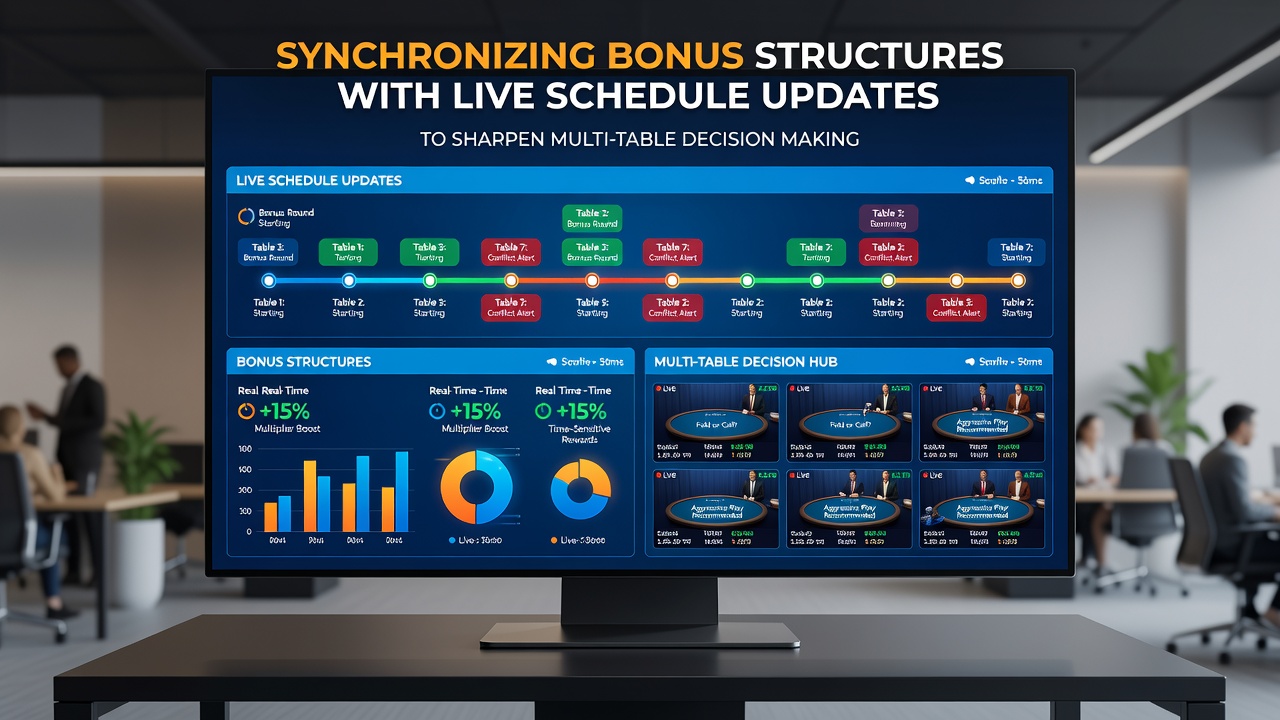
Online poker platforms integrate bonus structures directly with live schedule feeds so players receive real-time alerts when promotional rewards align with upcoming events, and this coordination allows multi-tabling participants to adjust table selections without manual cross-referencing. Data from industry reports shows that synchronized systems reduce decision latency by routing notifications through a single dashboard where bonus multipliers appear alongside schedule changes.
Core Components of Bonus Alignment
Bonus frameworks in poker sites typically include rakeback percentages, deposit matches, and leaderboard incentives, while live schedule updates cover tournament start times, late registration windows, and overlay guarantees, and operators merge these data streams so that a player sees an elevated cashback rate attached to a specific mid-stakes event the moment registration opens. Researchers at institutions tracking gaming patterns have documented that such merged feeds improve selection accuracy because users evaluate reward value and timing in one interface rather than switching between separate menus.
Real-Time Data Flows in Practice
Platforms pull schedule information from centralized tournament servers and push it to player accounts alongside bonus ledgers, and this process runs continuously during peak hours so adjustments to guarantees or added events trigger immediate bonus recalculations. One documented workflow involves an operator updating a Sunday major's prize pool, which then automatically adjusts associated leaderboard points displayed to multi-table users who hold active bonus progress. Figures released by the Australian Gambling Research Centre reveal that sites employing unified data pipelines record higher session continuity rates because players stay logged in to monitor both reward progress and schedule shifts without interruption.
Impact on Multi-Table Decision Processes
Multi-tabling requires rapid assessment of table profitability, variance levels, and time commitments, and when bonus data updates live with schedules, players gain an additional filter that ranks available tables according to current promotional value. Observers note that this ranking happens within the client software, where color-coded indicators highlight tables that combine favorable structures with active bonus multipliers, and the result is a streamlined selection sequence that incorporates both game dynamics and reward optimization. Studies conducted through university gaming labs have measured faster table-joining times when such indicators operate because users avoid separate calculations for reward eligibility.

During periods of high tournament volume, such as the expanded bracelet series scheduled across Horseshoe and Paris Las Vegas properties in July 2026, synchronized feeds become particularly relevant because satellite events and side tournaments receive frequent guarantee adjustments that affect bonus accrual rates. Operators who link these updates to player dashboards enable participants running four or more tables to drop lower-value options quickly when a higher-reward event appears with matching promotional terms.
Implementation Across Platforms
Development teams build API connections between tournament management systems and loyalty engines so that any schedule modification propagates to bonus displays within seconds, and testing conducted by platform providers shows error rates below one percent when these connections operate under load. Players access the combined view through customizable filters that sort tables by net expected value inclusive of current bonuses, and this approach has been adopted by networks operating in multiple jurisdictions to maintain consistency across regional player bases. Reports from the European Gaming and Betting Association indicate that integrated systems also support compliance tracking because reward modifications tied to schedule events remain auditable through timestamped logs.
Observed Patterns in Player Behavior
Those who routinely multi-table report using the synchronized displays to prioritize events where bonus thresholds align with registration deadlines, and this pattern emerges most clearly during series with overlapping daily schedules. Software analytics from several major sites show increased table occupancy in mid-stakes brackets when bonus multipliers activate alongside schedule releases, while lower-value tables experience quicker turnover as users migrate based on the unified data. Academic papers examining decision speed in simulated multi-table environments confirm that access to combined metrics correlates with reduced hesitation intervals between table selections.
Conclusion
Coordination between bonus structures and live schedule updates supplies multi-table players with consolidated information that supports precise table management across varying tournament calendars, and ongoing platform refinements continue to tighten the integration between these two data sets for clearer operational visibility.