Mapping Poker Tendencies: Aggregated Hand Histories Across Major Platforms
Written by Zoe Klein · Jul 6, 2026
Mapping Poker Tendencies: Aggregated Hand Histories Across Major Platforms
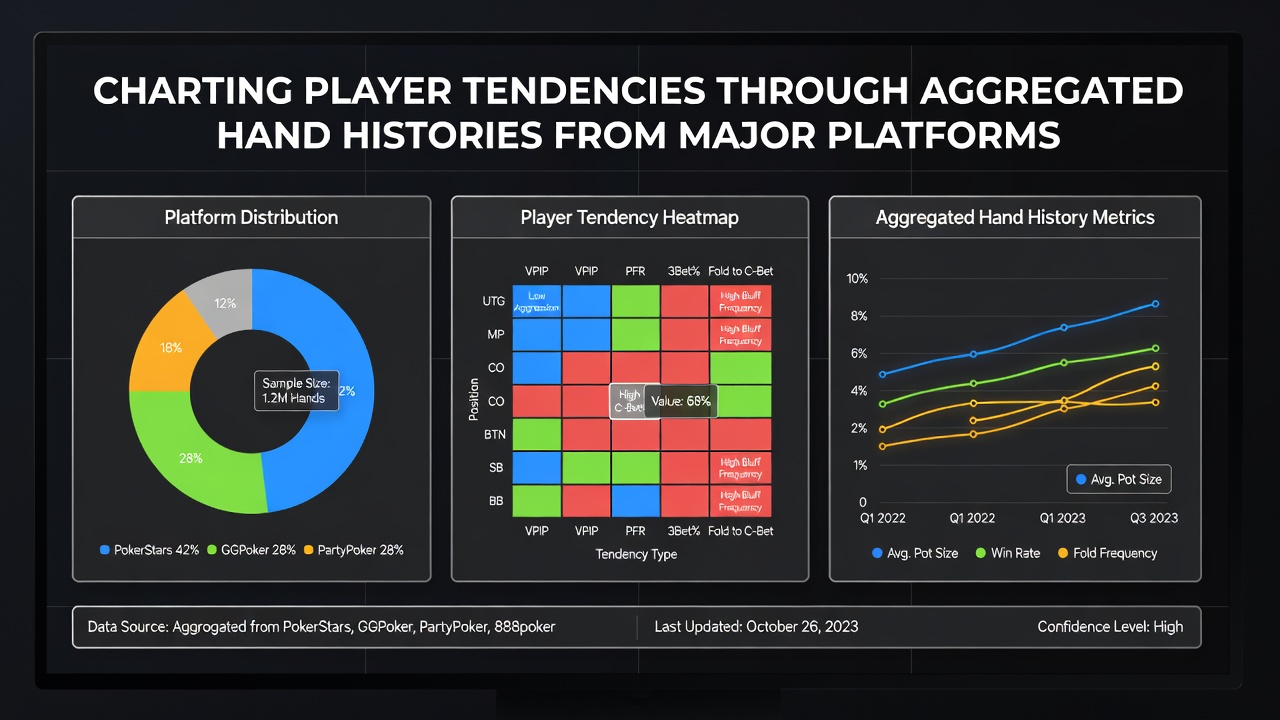
Platforms such as PokerStars and GGPoker generate vast quantities of hand histories each day, and when these records get aggregated analysts obtain clear views into recurring player behaviors that individual sessions rarely reveal. Data aggregation pulls together millions of hands from tournaments and cash games, then sorts them by position, stack depth, and game type so that patterns like voluntary put-in-pot rates or continuation bet frequencies stand out across thousands of opponents rather than one or two. Observers note that this scale of information helps software tools calculate reliable statistics even when a single player has only a few hundred hands on record.
Core Metrics Derived from Aggregated Records
VPIP and PFR remain foundational measurements because they capture how often players enter pots preflop and how often they raise when they do, yet aggregated datasets allow these figures to be sliced further by blind level or by opponent type. Three-bet percentages, fold-to-three-bet rates, and steal frequencies gain precision once the sample expands beyond what any single user could collect alone, and platforms feed this information into heads-up displays that update in real time. Researchers at institutions tracking online gaming have shown that sample sizes above ten thousand hands reduce variance enough for tendencies to stabilize, which is why major sites now supply bulk export options that feed directly into third-party analysis programs.
Platform-Specific Data Practices in 2026
By July 2026 several major operators introduced standardized export formats that include anonymized player IDs and timestamped action sequences, making cross-site comparisons simpler for those who track multiple rooms. One industry report released that month highlighted how these unified formats cut processing time by nearly forty percent for analysts working with combined databases. The change also lets regulatory bodies in regions such as Ontario and New Jersey verify that statistical tools operate on verified hand data rather than simulated samples, which strengthens compliance audits without exposing individual identities.
Practical Applications for Players and Coaches
Coaches use aggregated histories to build opponent profiles that highlight exploitable leaks, for instance spotting a population that over-folds to river bets on certain board textures. Players import their own histories alongside population benchmarks to see whether their aggression metrics sit above or below average, then adjust pre-session strategies accordingly. Take one study conducted through the Alcohol and Gaming Commission of Ontario that examined anonymized tournament data; the figures revealed that late-position steal attempts succeeded twenty-three percent more often when the original raiser showed a VPIP under fifteen percent across prior orbits.
Technical Considerations and Privacy Safeguards
Aggregation services strip personally identifiable information before storing hands, yet they retain action sequences so that range construction remains possible. Encryption protocols and access controls limit who can query the full dataset, while public leaderboards display only percentile rankings rather than raw names. According to documentation from the Nevada Gaming Control Board, these measures align with broader responsible-gaming guidelines that require operators to prevent data misuse while still allowing statistical research that improves game integrity.
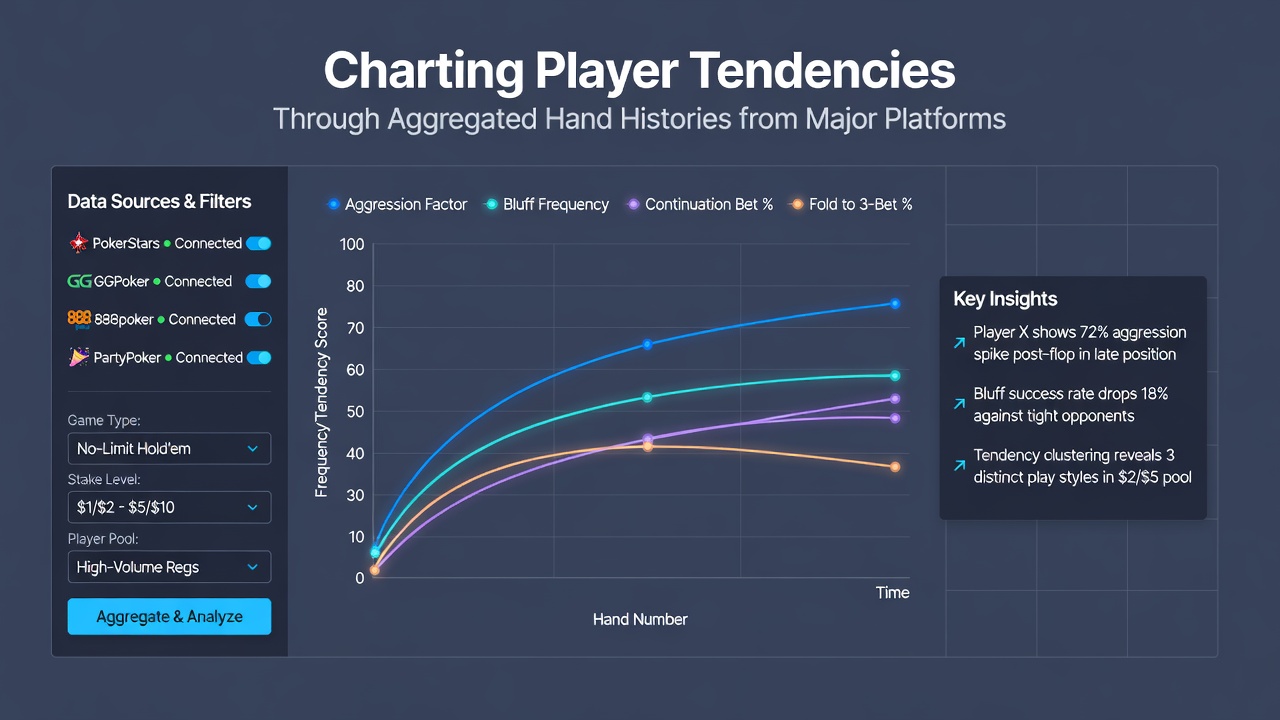
Third-party HUD developers integrate live feeds from multiple rooms so that a player moving between sites carries consistent statistical overlays. This interoperability matters because many regulars now split their volume across several platforms to access different tournament schedules and player pools. The resulting combined histories produce more robust reads than any single-room sample could provide, especially in fast-fold formats where hand counts accumulate quickly.
Future Developments Expected After Mid-2026
Upcoming API expansions planned for late 2026 aim to include positional filtering and board texture tagging directly in export files, reducing the preprocessing load for analysts. Industry groups such as the European Gaming and Betting Association have begun drafting voluntary standards for these enhanced exports so that smaller operators can participate without building custom solutions. Observers expect the changes to accelerate adoption of machine-learning models that detect multi-street tendencies rather than single-street stats alone.
Conclusion
Aggregated hand histories now form the backbone of modern poker analysis by turning scattered individual records into population-level insights that guide both recreational and professional decision-making. As platforms refine export tools and privacy frameworks, the granularity of available data continues to rise while safeguards keep pace with regulatory expectations across jurisdictions. Those who study these consolidated records gain access to patterns that were previously invisible, turning raw action sequences into actionable knowledge that shapes strategy across major online environments.