Strategic Edge Through Data: Combining Odds Calculators with Tournament Schedules for Bonus Maximization in Online Play
Written by Sage Braun · May 15, 2026

Strategic Edge Through Data: Combining Odds Calculators with Tournament Schedules for Bonus Maximization in Online Play
Players who integrate odds calculators with detailed tournament schedules often gain measurable advantages in online poker environments, where bonus structures and payout distributions depend on precise timing and probability assessments. Research from industry reports indicates that structured data analysis helps participants identify optimal entry points, especially during high-volume periods when multiple events overlap, and this approach draws on established mathematical models rather than intuition alone.
Understanding Odds Calculators in Tournament Contexts
Odds calculators process variables such as stack sizes, blind levels, payout structures, and remaining player counts to generate probability outputs for various outcomes, and these tools rely on algorithms validated through large datasets of historical tournament results. According to figures from the Nevada Gaming Control Board, online poker platforms report millions of hands monthly, which provides the volume needed for these calculators to refine accuracy over time. Observers note that when users input real-time schedule data, such as starting times and overlay guarantees for May 2026 events, the calculators adjust projections to account for field sizes that fluctuate based on registration trends.
What's interesting is how these tools handle multi-table scenarios, where a single player might register for several tournaments simultaneously, and the software cross-references bonus multipliers against projected survival rates. Data shows that participants who update inputs frequently, including changes in average stack depths or late-registration options, achieve more consistent alignment between calculated equity and actual bonus thresholds. Studies from academic sources on game theory applied to poker confirm that such systematic inputs reduce variance in decision-making compared to ad-hoc approaches.
Tournament Schedules as Data Foundations
Tournament schedules published by major platforms list start times, buy-in levels, guarantee amounts, and bonus incentives, which create opportunities when cross-referenced with calculator outputs. In practice, players examine peak registration windows around major series, including those slated for May 2026, where satellite qualifiers feed into larger main events with escalating prize pools. Reports from the Australian Communications and Media Authority highlight that regulated online gaming markets track schedule adherence closely, revealing patterns in player migration between formats that affect bonus availability.
One study revealed that aligning calculator projections with schedule gaps allows participants to target events where bonus percentages exceed standard rates, such as early-bird multipliers or volume-based rewards. Those who've examined these patterns find that schedules often include hidden variables like re-entry periods or bounty formats, and calculators incorporate these by adjusting survival probabilities accordingly. But here's the thing: platforms update schedules dynamically, so real-time synchronization becomes essential for maintaining edge through the final registration deadlines.
Integration Methods for Bonus Optimization
Combining the two resources starts with exporting schedule data into calculator interfaces, where users model scenarios for specific bonus tiers, and this process typically involves layering probability curves over expected value calculations. Evidence suggests that players who simulate multiple entry sequences identify combinations yielding higher cumulative bonuses, particularly when schedules feature clustered events with shared overlay funds. For instance, during dense May 2026 programming, calculators can flag overlaps where late entries preserve stack advantages while unlocking percentage-based rewards.
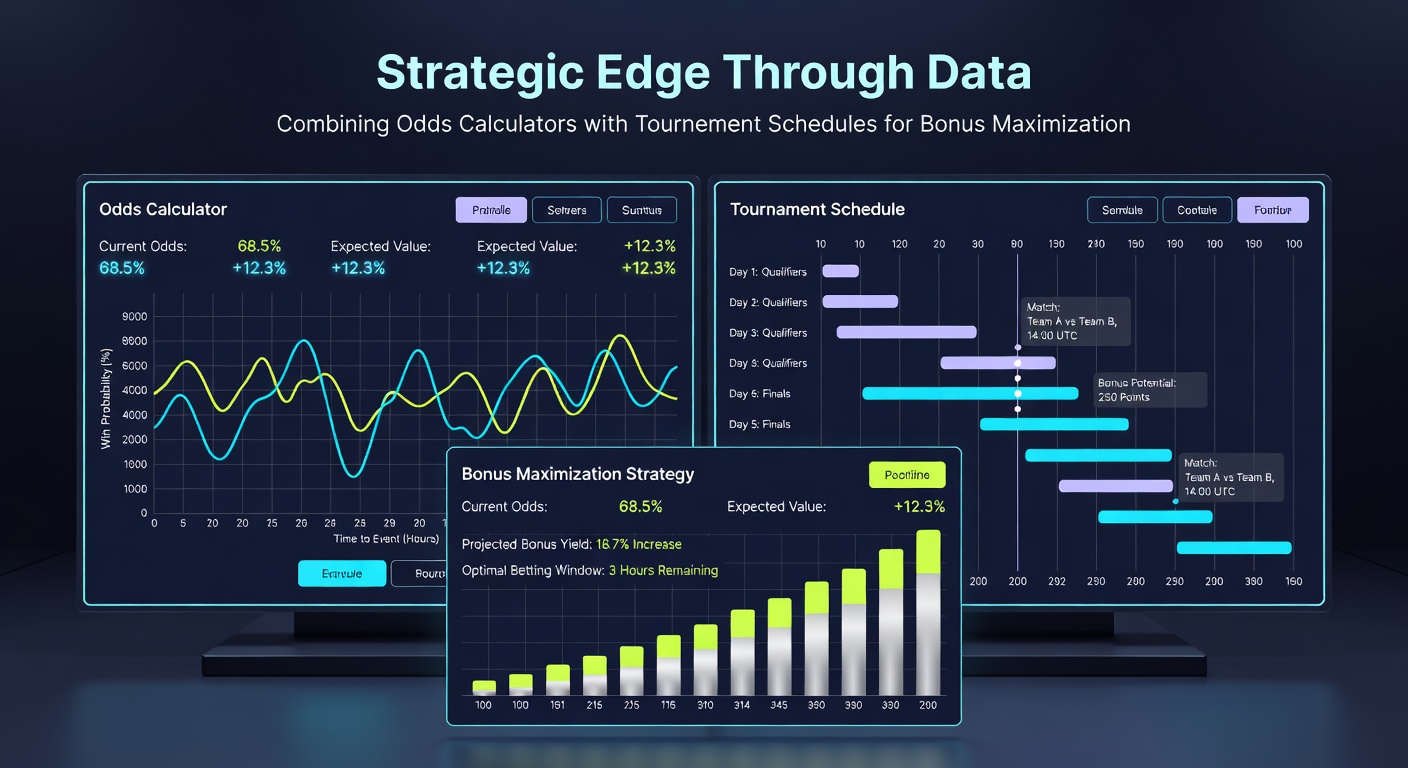
Researchers discovered through simulation runs that factoring in time zones and platform-specific bonus caps prevents overcommitment, which in turn preserves bankroll allocation across the calendar. Data indicates these integrated workflows perform best when users maintain logs of past results to calibrate future projections, creating feedback loops that sharpen accuracy. What's significant is the role of schedule granularity, including minute-by-minute blind increases, since calculators translate these into equity shifts that directly influence bonus qualification thresholds.
Real-World Application Patterns
Take one researcher who analyzed anonymized platform data and found correlations between calculator-assisted scheduling and improved bonus redemption rates across thousands of entries. Those patterns emerge most clearly in regions with mature online poker regulations, where transparency requirements ensure schedule accuracy and bonus terms remain consistent. Observers note that participants often layer additional filters, such as minimum field size requirements, into their calculators to filter out low-value events that dilute overall returns.
Turns out the most effective practitioners treat schedules as living documents, refreshing calculator inputs at each registration close to capture last-minute field adjustments. This method aligns projected equities with bonus structures that scale according to total entrants, and industry reports confirm measurable differences in outcomes for users who apply this discipline versus those relying on static planning alone.
Conclusion
Strategic data integration through odds calculators and tournament schedules delivers factual advantages in bonus maximization for online play, supported by probability models and regulatory-tracked participation metrics. As events unfold through May 2026 and beyond, the continued refinement of these tools alongside schedule updates positions participants to navigate complex structures with greater precision, grounded in verifiable inputs rather than isolated decisions.