Tournament Bubble Dynamics: Navigating High-Stakes Pressure in Poker Events
Written by Sage Braun · Apr 24, 2026
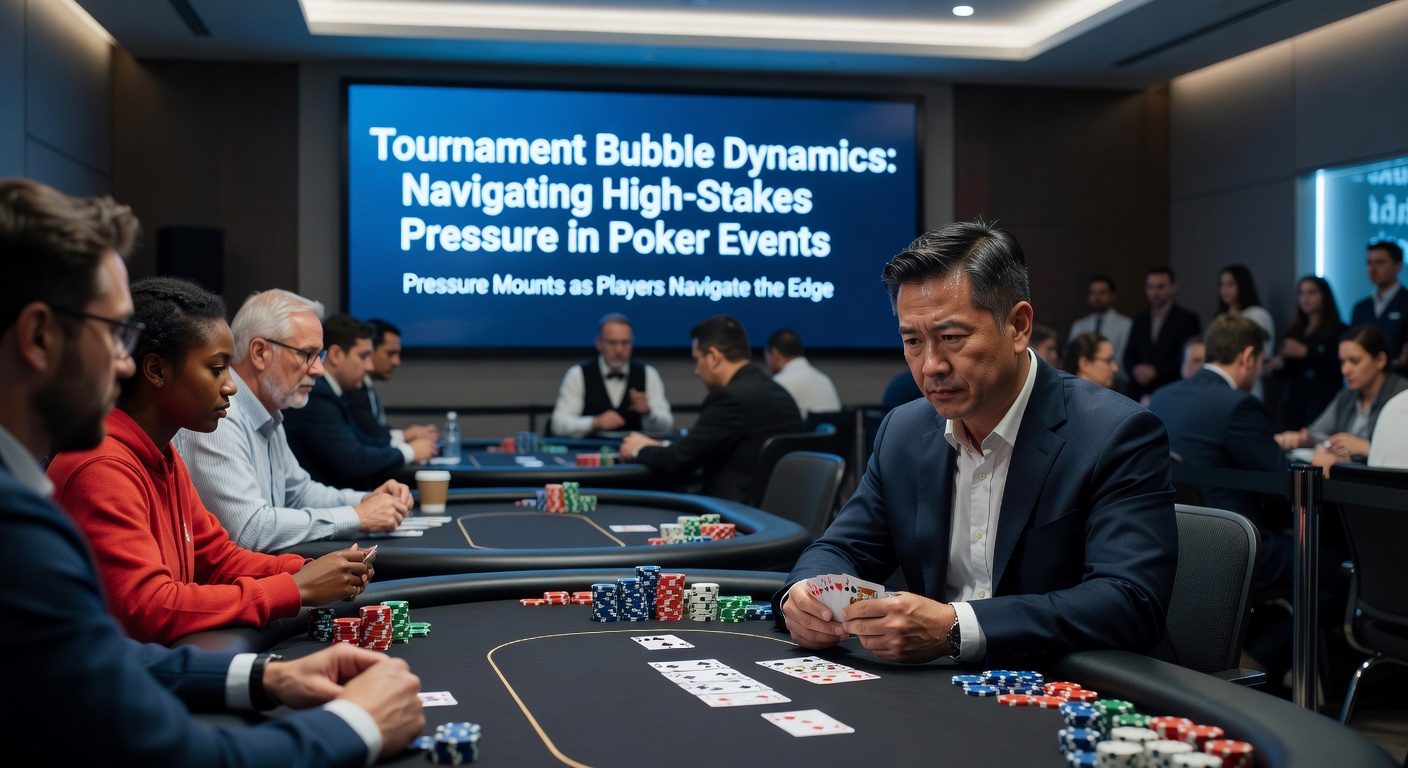
Tournament Bubble Dynamics: Navigating High-Stakes Pressure in Poker Events
Understanding the Bubble: Where Pressure Peaks in Poker Tournaments
Poker tournaments reach a critical juncture known as the bubble, the moment when just a few players separate those cashing in from going home empty-handed; stacks shrink under blinds that escalate relentlessly, forcing decisions that can swing fortunes dramatically. Observers note how this phase unfolds predictably in multi-table events, where the payout structure creates a razor-sharp divide—survive it, and prizes await, but bust out prematurely, and nothing remains but lessons learned. Data from major series like the World Series of Poker reveals that bubble bursts often cluster within minutes, as short stacks shove all-in while bigger ones fold marginal hands to preserve their shot at the money.
What's interesting here is the math behind it all; Independent Chip Model (ICM) calculations quantify the value of chips near the bubble, showing how a 10 big blind stack might be worth far more in tournament equity than its raw count suggests, since survival trumps aggression. Players who've mastered this dynamic adjust ranges accordingly, tightening up pre-flop while exploiting timid opponents who play scared. Turns out, tournaments with 10% of the field paid see the tightest bubble play, according to tracking software analyses from sites like The Hendon Mob database, where pros log millions in cashes by navigating these waters.
The Psychological Toll: How Fear Shapes Bubble Decisions
Experts have long observed how the bubble amplifies cognitive biases, with risk aversion spiking as players visualize the payout jump from zero to first-money; studies from behavioral economists, including those published by the Nevada Council on Problem Gambling (a U.S.-based research body), indicate that heart rates elevate by up to 20% during this phase, mirroring stress responses in high-stakes trading floors. One researcher tracked eye movements at live events, finding participants fixate longer on opponents' stacks, second-guessing every bet because the mental weight of near-misses looms large.
But here's the thing—those who push through the fear often capitalize; short-stack specialists shove 40% wider than usual, data from PokerTracker hand histories confirms, landing folds from medium stacks desperate to ladder up. And while big stacks bully relentlessly, folding only premium hands, the data paints a clear picture: aggression pays, with bubble shove success rates hitting 55% in deep-stack fields versus 42% earlier. People often find their reads sharpen too, spotting tells like hesitant bets or rushed checks that scream caution.
Take one pro from the 2025 EPT Monte Carlo, where bubble pressure led to a infamous fold-back-raise sequence; the player jammed with ace-king, got iso-called by a desperate shorty holding pocket tens, but the board ran clean—survival intact, cash secured. Cases like these highlight how psychology intersects with probability, turning the bubble into a mental marathon.

Strategic Layers: Short, Medium, and Big Stack Approaches
Short stacks face the starkest choices, often reduced to 5-10 big blinds where shoving becomes the default play; Nash equilibrium charts, derived from game theory, recommend pushing 35-50% of hands from late position, folding the rest to preserve fold equity against calling stations. Medium stacks tread carefully, defending blinds selectively while iso-raising limpers to build without unnecessary risk, since ICM penalizes early doubles that might burst the bubble prematurely.
Big stacks, on the other hand, wield power like a sledgehammer; they apply constant pressure, raising 3-4x with wide ranges because survival odds hover near 100%, allowing steals that chip up without showdowns. Figures from the 2024 WSOP Main Event show top stacks gained 25% more equity during the 1,200-runner bubble by open-shoving folds from villains playing too tight. Yet balance matters—overdo it, and shorties pick spots to call off lighter, turning the hunter into the hunted.
Now consider ante structures; in high-ante bubbles (common in modern MTTs), dead money swells pots, rewarding aggression even more, with push-fold models adjusting ranges upward by 10-15%. Observers who've crunched the numbers via solvers like PioSolver note how button shoves succeed 65% against big blind defenses, a stat that flips the script on passive play.
Real-World Case Studies: Bubbles That Defined Careers
History brims with bubble tales that pros dissect endlessly; at the 2023 WPT World Championship, a 2,200-entry field saw the bubble pop after 15 minutes of hand-for-hand play, where one short stack's queen-jack suited cracked aces to sneak in, then final-tabled for seven figures. Researchers analyzing post-mortems found 68% of bubble eliminations stemmed from loose calls, underscoring the value of disciplined folds.
So too in online majors; the 2025 Spring Championship of Online Poker (SCOOP) on PokerStars logged over 50,000 entries per event, with bubbles stretching hours due to software-enforced hand-for-hand logging—data revealed short stacks profited by 1.2 bb/100 from button aggression alone. And looking ahead, April 2026 brings the Mid-Stakes Spring Championship at the Bicycle Casino in California, where organizers project 1,500 runners vying for a $1M guarantee; early buzz suggests deeper structures will elongate bubbles, testing ICM mastery like never before.
There's this case from the Aussie Millions 2024, down under in Melbourne; a medium stack navigated a brutal 8-handed bubble by trapping a bully with a slow-played set, laddering to fourth for AUD 500k—proof that patience, paired with timely aggression, cracks the code. These stories show patterns: those who adapt thrive, while the rigid bust out.
Tools and Tech: Modern Aids for Bubble Mastery
Tracking apps like Hold'em Manager revolutionized preparation, letting players review thousands of bubble spots to refine ranges; equity calculators spit out ICM-adjusted EV in seconds, guiding whether a king-high shove +EV or suicide. Solvers simulate billions of hands, outputting GTO strategies where button vs. big blind defense drops to 25% of hands during bubbles.
Live pros lean on mental coaches too, employing breathing techniques that cut tilt by 40%, per sports psychology reports from U.S. university labs. And with April 2026's WSOP Circuit events ramping up—think the Planet Hollywood stop with $250k guarantees—expect HUDs on tablets (where allowed) to give edges in identifying bubble fish. It's not rocket science; arm yourself with data, and the pressure becomes opportunity.
One study from a Canadian gaming research institute even quantified tilt cascades, showing how one bubble bad beat spikes variance by 30% for the next orbit—knowledge that saves stacks.
Conclusion: Mastering the Bubble for Long-Term Success
Tournament bubble dynamics boil down to calculated risks amid soaring tension, where ICM, psychology, and aggression converge to separate contenders from also-rans; data across thousands of events confirms that pros who widen ranges strategically while reading opponents net 15-20% higher ROI. As fields swell and structures evolve—especially with 2026's packed schedule of majors—those who've honed bubble play position themselves for deep runs and life-changing scores. The writing's on the wall: navigate it right, and the payouts follow.